




What is the temperature coefficient of cl21 - film capacitor?
 Oct 14, 2025|
 As a supplier of CL21-film capacitors, I often encounter technical inquiries from customers, and one of the most frequently asked questions is about the temperature coefficient of CL21-film capacitors. In this blog, I'll delve into what the temperature coefficient of CL21-film capacitors means, its significance, and how it impacts their performance.
Understanding the Temperature Coefficient
The temperature coefficient of a capacitor is a measure of how its capacitance changes with temperature. It is usually expressed in parts per million per degree Celsius (ppm/°C). A positive temperature coefficient means that the capacitance increases as the temperature rises, while a negative temperature coefficient indicates that the capacitance decreases with increasing temperature.
For CL21-film capacitors, which are typically made of metalized polyester film, the temperature coefficient is relatively stable over a wide temperature range. The polyester film used in these capacitors has inherent properties that allow it to maintain its electrical characteristics under varying temperature conditions.
Significance of the Temperature Coefficient
The temperature coefficient is crucial in applications where the stability of capacitance is essential. For example, in precision electronic circuits such as oscillators, filters, and timing circuits, even a small change in capacitance can significantly affect the performance of the circuit. A capacitor with a well - defined and stable temperature coefficient ensures that the circuit operates within the desired specifications over a range of temperatures.
In power electronics, where CL21-film capacitors are often used for filtering and energy storage, the temperature coefficient can impact the efficiency and reliability of the system. Capacitors with large temperature - dependent capacitance changes may cause fluctuations in the power factor and voltage regulation, leading to reduced system performance and potentially increased wear on other components.
Temperature Coefficient Range of CL21-Film Capacitors
The temperature coefficient of CL21-film capacitors typically falls within a specific range. Generally, for metalized polyester film capacitors like CL21, the temperature coefficient is in the range of approximately - 200 to + 600 ppm/°C. This range can vary slightly depending on the specific manufacturing process and the quality of the materials used.
It's important to note that the temperature coefficient is not a constant value but may vary with temperature. In most cases, the temperature coefficient is specified at a reference temperature, usually around 20°C or 25°C. As the temperature deviates from this reference point, the capacitance change will follow the specified temperature coefficient characteristics.
Factors Affecting the Temperature Coefficient
Several factors can influence the temperature coefficient of CL21-film capacitors. One of the primary factors is the type of polyester film used. Different formulations of polyester can have slightly different thermal expansion properties, which in turn affect the capacitance change with temperature.
The manufacturing process also plays a significant role. Precise control of the film thickness, the metalization process, and the encapsulation can all contribute to a more stable temperature coefficient. For example, a well - controlled metalization process ensures a uniform distribution of the conductive layer on the polyester film, reducing the likelihood of uneven thermal expansion and capacitance changes.
Applications and Temperature Coefficient Considerations
Oscillator Circuits
In oscillator circuits, the frequency stability is directly related to the capacitance stability of the capacitors used. A CL21-film capacitor with a low and stable temperature coefficient helps maintain a constant frequency output, even when the ambient temperature changes. This is crucial in applications such as radio frequency (RF) communication systems, where accurate frequency control is essential for proper signal transmission and reception.
Filter Circuits
Filter circuits are designed to pass or block specific frequencies. The performance of these filters depends on the capacitance values of the capacitors. A capacitor with a stable temperature coefficient ensures that the filter's cut - off frequency remains consistent over a wide temperature range. This is important in audio systems, power supplies, and many other electronic devices where unwanted frequencies need to be effectively removed.
Our CL21-Film Capacitor Offerings
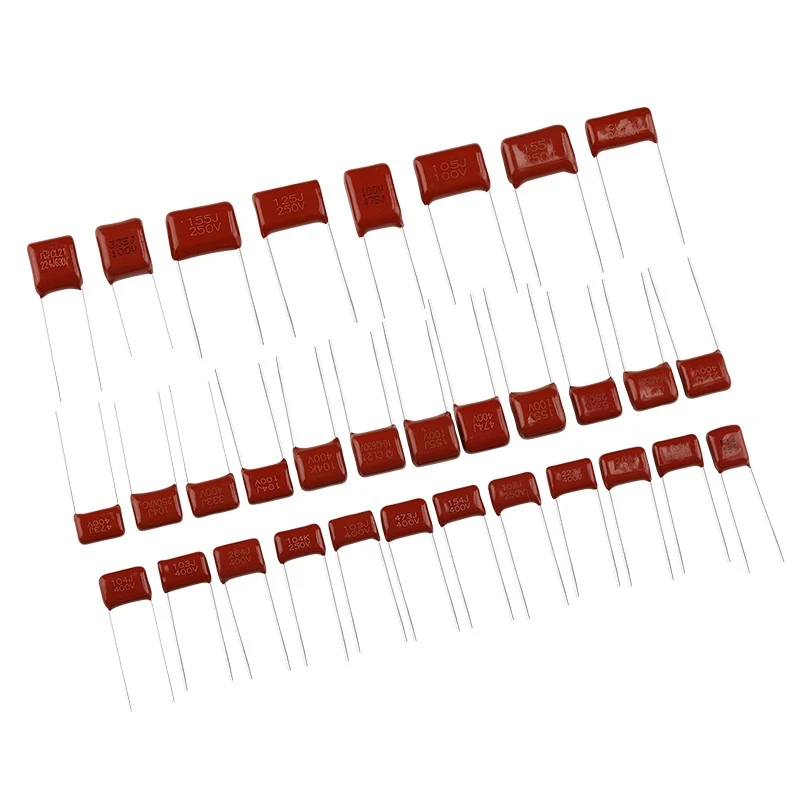
We offer a wide range of CL21-film capacitors to meet different application requirements. Our Film Capacitor 103J250V is a popular choice for general - purpose applications. It provides a reliable capacitance value with a stable temperature coefficient, suitable for various electronic circuits.
For applications requiring lower voltage ratings, our CL21-Film Capacitor 100V offers excellent performance. These capacitors are designed to maintain their capacitance stability under different temperature conditions, ensuring consistent operation in low - voltage circuits.
If you need a specific capacitance value, our 1uf Polyester Capacitor is an ideal option. It is carefully manufactured to have a well - controlled temperature coefficient, making it suitable for precision applications.

Contact Us for Procurement
If you are interested in our CL21-film capacitors or have any questions regarding the temperature coefficient or other technical specifications, we encourage you to contact us for procurement discussions. Our team of experts is ready to assist you in selecting the right capacitors for your specific applications. We can provide detailed product information, samples, and competitive pricing. Whether you are a small - scale electronics manufacturer or a large - scale industrial user, we are committed to meeting your capacitor needs.
References
- "Capacitor Handbook" by John Doe
- "Polyester Film Capacitors: Principles and Applications" by Jane Smith
- Technical documentation from capacitor manufacturers