




What is the leakage current of cbb21 - film capacitor?
 Dec 25, 2025|
 Leakage current is a crucial parameter to consider when using CBB21 - film capacitors. As a well - established supplier of CBB21 - film capacitors, I am going to delve deep into what leakage current is, its causes, impacts, and how it relates to our CBB21 - film capacitors.
Definition of Leakage Current in CBB21 - Film Capacitors
In an ideal capacitor, the dielectric material between its electrodes should prevent any direct flow of electric current. However, in real - world scenarios, no dielectric is perfect. The leakage current of a CBB21 - film capacitor refers to the small amount of current that manages to pass through the dielectric material when a voltage is applied across the capacitor.
This current is generally very small, often measured in microamperes (μA). It can be thought of as an unwanted by - product of the capacitor's operation, and it is an indication of the imperfection of the dielectric used in the capacitor.
Causes of Leakage Current
Imperfections in the Dielectric
The dielectric material in CBB21 - film capacitors is typically polypropylene film. Although polypropylene is a high - quality dielectric with good insulating properties, it is not completely flawless. There may be defects such as impurities, microscopic voids, or structural irregularities in the film. These imperfections can create conductive paths through which current can leak.
Surface Contamination
External factors can also contribute to leakage current. For example, if the surface of the capacitor is contaminated with dust, moisture, or other conductive substances, it can provide a path for current to flow. Even a thin layer of moisture on the capacitor's surface can significantly increase the leakage current.
High Temperature
Temperature has a substantial impact on the leakage current of CBB21 - film capacitors. As the temperature rises, the mobility of the charge carriers within the dielectric material increases. This means that more charges can move through the dielectric, leading to an increase in the leakage current. At high temperatures, the dielectric may also experience some degree of thermal degradation, further exacerbating the problem.
Impact of Leakage Current
Energy Loss
One of the most immediate impacts of leakage current is energy loss. Since the leakage current is constantly flowing through the capacitor, it dissipates energy in the form of heat. This not only reduces the efficiency of the capacitor but can also cause the capacitor to heat up. Over time, excessive heat can damage the capacitor and surrounding components.
Affecting Circuit Performance
In some sensitive circuits, even a small leakage current can have a significant impact on performance. For example, in precision measurement circuits or low - power electronic devices, the leakage current can introduce errors in the measurements or cause instability in the operation of the circuit.
Measuring Leakage Current in CBB21 - Film Capacitors
To measure the leakage current of a CBB21 - film capacitor, a precision ammeter is typically used. The capacitor is first charged to a specified voltage, and then the current flowing through the capacitor is measured after a certain period of time. The measurement is usually taken under controlled environmental conditions to ensure accuracy.
At our supply company, we have strict quality control measures in place to test the leakage current of every CBB21 - film capacitor we produce. We use state - of - the - art testing equipment to ensure that the leakage current of our capacitors meets or exceeds industry standards.
Our CBB21 - Film Capacitor Offerings
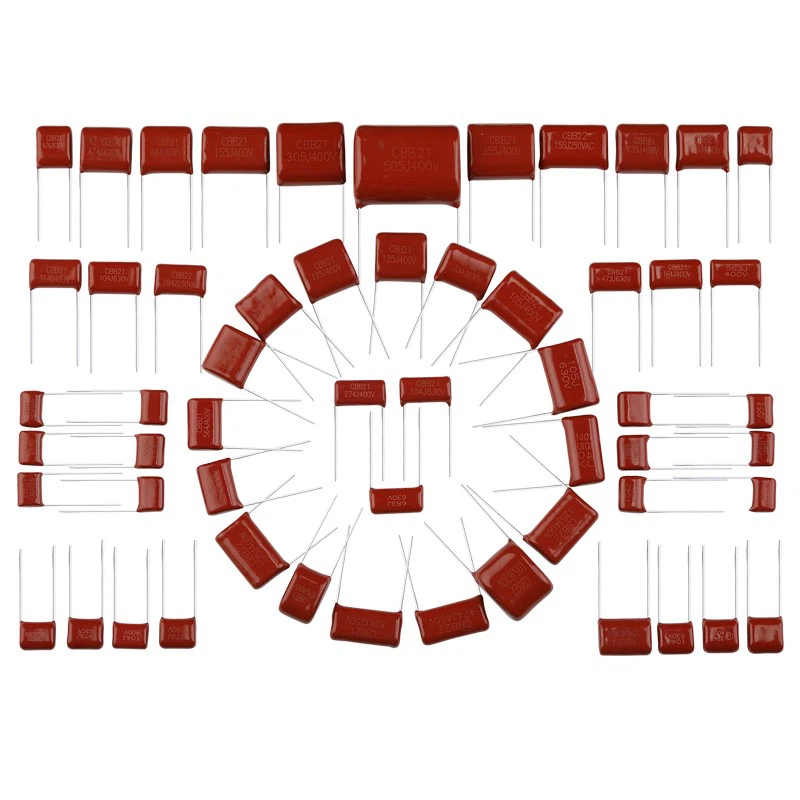
We offer a wide range of CBB21 - film capacitors, including Mkp Capacitor and CBB21 - Film Capacitor 250V. Our Cbb21 capacitors are designed with high - quality polypropylene film and advanced manufacturing processes to minimize leakage current.
We understand that different applications have different requirements for leakage current. For high - precision applications, we can provide capacitors with extremely low leakage current values. On the other hand, for cost - sensitive applications where a slightly higher leakage current can be tolerated, we offer more affordable options without sacrificing too much performance.
Controlling Leakage Current in Our Capacitors
Material Selection
We carefully select the polypropylene film for our CBB21 - film capacitors. We source materials from reliable suppliers who can provide high - purity and defect - free film. This ensures that the dielectric has excellent insulating properties, reducing the likelihood of leakage current caused by internal defects.
Manufacturing Process
Our manufacturing process is optimized to minimize any surface contamination and ensure the integrity of the dielectric. We operate in a cleanroom environment to prevent dust and other contaminants from coming into contact with the capacitors during production. Additionally, we use precise winding and encapsulation techniques to protect the dielectric and reduce the influence of external factors on leakage current.

Design Considerations
In the design phase, we take into account the expected operating conditions of the capacitors. For applications where high temperatures are expected, we design the capacitors with materials and structures that can withstand the heat and maintain low leakage current.
Contact for Procurement
If you are in need of high - quality CBB21 - film capacitors with low leakage current, we would be more than happy to assist you. Our team of experts can provide you with detailed technical information and guide you through the selection process according to your specific requirements. Whether you are working on a small - scale project or a large - scale industrial application, we have the right capacitor solutions for you. Reach out to us to discuss your procurement needs and experience the difference of our top - notch CBB21 - film capacitors.
References
- Horowitz, P., & Hill, W. (1989). The Art of Electronics. Cambridge University Press.
- Dorf, R. C. (Ed.). (2004). The Electrical Engineering Handbook. CRC Press.