




What are the failure modes of Cbb21?
 Dec 16, 2025|
 As a supplier of Cbb21 capacitors, I've witnessed firsthand the widespread use and importance of these components in various electronic applications. Cbb21 capacitors, known for their excellent electrical properties and reliability, are a popular choice in the industry. However, like any electronic component, they are not immune to failure. In this blog, I'll delve into the common failure modes of Cbb21 capacitors, providing insights that can help you better understand and manage these issues.
1. Dielectric Breakdown
One of the most critical failure modes of Cbb21 capacitors is dielectric breakdown. The dielectric material in Cbb21 capacitors, typically polypropylene film, acts as an insulator between the capacitor's electrodes. When the voltage across the capacitor exceeds its rated voltage, the dielectric can no longer withstand the electric field, leading to a breakdown.
This breakdown can occur due to several reasons. Overvoltage conditions, such as power surges or improper circuit design, can subject the capacitor to voltages higher than its rated value. Additionally, long - term exposure to high temperatures can degrade the dielectric material, reducing its breakdown voltage. Once dielectric breakdown occurs, the capacitor loses its insulating properties, resulting in a short - circuit between the electrodes. This can cause a significant increase in current flow, potentially damaging other components in the circuit.
For example, in a power supply circuit, if a Cbb21 capacitor experiences dielectric breakdown, it can lead to a sudden drop in the output voltage and may even cause the power supply to fail. To prevent dielectric breakdown, it's crucial to select Cbb21 capacitors with an appropriate voltage rating for the application. You can find a wide range of voltage - rated Cbb21 capacitors on our website, such as the CBB21 - Film Capacitor 400V and CBB21 - Film Capacitor 100V.
2. Capacitance Drift
Capacitance drift is another common failure mode of Cbb21 capacitors. The capacitance of a capacitor is a measure of its ability to store electrical charge. Over time, the capacitance of a Cbb21 capacitor can change due to various factors.
Temperature is a significant factor affecting capacitance drift. As the temperature changes, the physical properties of the dielectric material and the electrodes can change, leading to a shift in capacitance. High temperatures can cause the dielectric to expand, increasing the distance between the electrodes and reducing the capacitance. Conversely, low temperatures can cause the dielectric to contract, increasing the capacitance.
In addition to temperature, mechanical stress can also cause capacitance drift. Vibrations, shocks, or improper mounting of the capacitor can deform the dielectric or the electrodes, altering the capacitance value. Capacitance drift can be a problem in applications where precise capacitance values are required, such as in filter circuits or oscillator circuits. For instance, in a radio frequency (RF) filter circuit, a significant capacitance drift can shift the filter's frequency response, affecting the performance of the entire RF system.
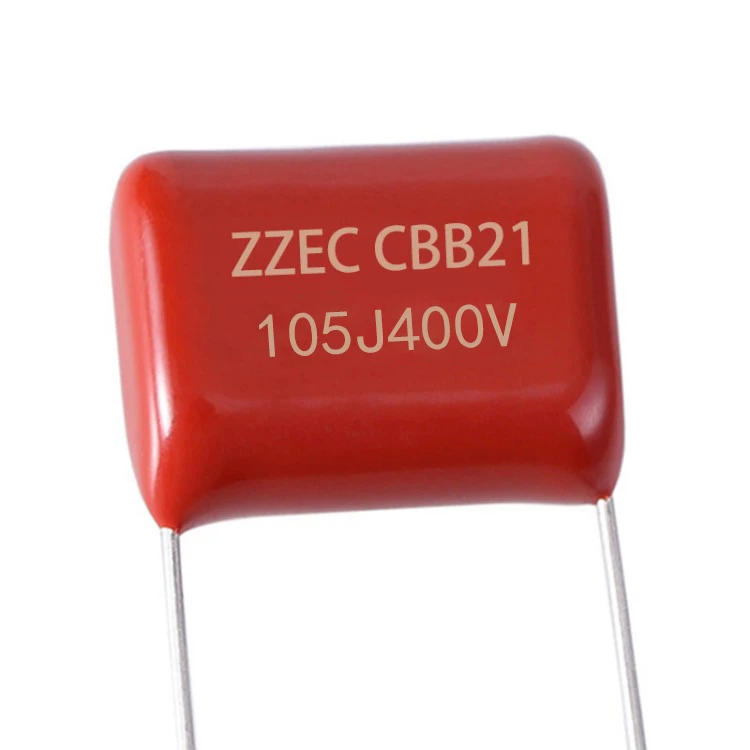
To minimize capacitance drift, it's important to choose Cbb21 capacitors with low temperature coefficients. Our Cbb21 105j400v capacitors are designed to have stable capacitance values over a wide temperature range, ensuring reliable performance in various applications.
3. Leakage Current
Leakage current is the current that flows through the dielectric of a capacitor when it is charged. In an ideal capacitor, the dielectric would be a perfect insulator, and there would be no leakage current. However, in real - world Cbb21 capacitors, some leakage current is inevitable.
Leakage current can increase over time due to factors such as dielectric aging, high temperatures, and overvoltage. Dielectric aging occurs as the capacitor is subjected to electrical stress and environmental factors over its lifetime. The dielectric material can gradually degrade, allowing more current to leak through. High temperatures can also accelerate the aging process and increase the leakage current.
Excessive leakage current can have several negative effects. It can cause power losses in the circuit, reducing the overall efficiency. In some cases, it can also cause the capacitor to heat up, further accelerating the degradation process. For example, in a battery - powered device, high leakage current in a Cbb21 capacitor can drain the battery more quickly, reducing the device's operating time.
To reduce leakage current, proper capacitor selection and circuit design are essential. Choosing high - quality Cbb21 capacitors with low leakage current specifications can help minimize this issue. Additionally, keeping the operating temperature within the recommended range can also help maintain low leakage current levels.
4. Electrode Erosion
Electrode erosion is a failure mode that can occur in Cbb21 capacitors, especially in high - current or high - frequency applications. The electrodes in a Cbb21 capacitor are typically made of metalized film. When a large current flows through the capacitor, the metal on the electrodes can be eroded due to the heat generated by the current.
In high - frequency applications, the rapid charging and discharging of the capacitor can also cause mechanical stress on the electrodes, leading to erosion. Electrode erosion can reduce the surface area of the electrodes, which in turn can increase the resistance of the capacitor and change its electrical properties.
As the electrodes erode, the capacitance of the capacitor may decrease, and the equivalent series resistance (ESR) may increase. An increase in ESR can cause the capacitor to heat up more during operation, further accelerating the erosion process. In power electronics applications, such as inverters or motor drives, electrode erosion in Cbb21 capacitors can lead to reduced efficiency and reliability of the system.
To mitigate electrode erosion, it's important to select Cbb21 capacitors with appropriate current - carrying capabilities for the application. Additionally, proper heat dissipation measures, such as using heat sinks or ensuring adequate ventilation, can help reduce the temperature and minimize electrode erosion.
5. Mechanical Damage
Mechanical damage is another factor that can lead to the failure of Cbb21 capacitors. Capacitors can be subjected to mechanical stress during handling, installation, or operation. Dropping the capacitor, applying excessive force during mounting, or exposure to vibrations can cause physical damage to the capacitor.
Mechanical damage can include cracking of the dielectric, detachment of the electrodes, or damage to the leads. A cracked dielectric can lead to dielectric breakdown, while detached electrodes can cause an open - circuit condition. Damage to the leads can result in poor electrical connections, increasing the resistance and potentially causing overheating.
In industrial environments, where there are often high levels of vibrations, mechanical damage is a common concern. For example, in a manufacturing plant, Cbb21 capacitors used in control circuits of machinery can be damaged by the vibrations generated by the equipment.
To prevent mechanical damage, proper handling and installation procedures should be followed. Capacitors should be stored and transported in a way that protects them from physical impact. During installation, care should be taken not to apply excessive force to the capacitor or its leads.
Conclusion
Understanding the failure modes of Cbb21 capacitors is crucial for ensuring the reliability and performance of electronic circuits. By being aware of these potential issues, you can take appropriate measures to prevent them, such as proper capacitor selection, circuit design, and maintenance.
At our company, we are committed to providing high - quality Cbb21 capacitors that are designed to minimize these failure modes. Our wide range of products, including CBB21 - Film Capacitor 400V, Cbb21 105j400v, and CBB21 - Film Capacitor 100V, are carefully tested to meet the highest standards of quality and reliability.
If you are looking for reliable Cbb21 capacitors for your electronic applications, we invite you to contact us for procurement and further discussions. Our team of experts is ready to assist you in selecting the right capacitors for your specific needs.

References
- "Capacitor Handbook" by TDK Corporation
- "Electronic Components and Their Applications" by Delton T. Horn
- Industry standards and technical documents related to metalized polypropylene film capacitors.