



Can Mkp Capacitors be used in coupling and decoupling applications?
 Jun 19, 2025|
 Mkp (Metallized Polypropylene) capacitors are widely recognized for their excellent electrical properties and reliability. As a dedicated Mkp capacitor supplier, I often encounter inquiries regarding their suitability for coupling and decoupling applications. In this blog post, I will delve into the technical aspects of Mkp capacitors and explore whether they can be effectively used in these crucial circuit functions.
Understanding Coupling and Decoupling Applications
Before we discuss the use of Mkp capacitors in coupling and decoupling, it's essential to understand what these applications entail.
Coupling is a technique used to transfer an AC signal from one circuit stage to another while blocking the DC component. In a coupling circuit, the capacitor allows the AC signal to pass through while preventing the DC bias of one stage from affecting the other. This is crucial in amplifier circuits, where different stages may have different DC operating points.
Decoupling, on the other hand, is used to provide a low - impedance path for high - frequency noise and ripple in a power supply. In a power distribution network, decoupling capacitors act as local energy storage devices. They absorb and release energy as needed, reducing the voltage fluctuations caused by the sudden changes in current demand from active components such as integrated circuits.
Characteristics of Mkp Capacitors
Mkp capacitors are made by depositing a thin layer of metal onto a polypropylene film. This construction gives them several key characteristics that make them attractive for various applications:
- Low Losses: Mkp capacitors have very low equivalent series resistance (ESR) and equivalent series inductance (ESL). Low ESR means less power is dissipated as heat, and low ESL allows the capacitor to respond quickly to high - frequency signals. This makes them suitable for high - frequency applications.
- High Insulation Resistance: The polypropylene film used in Mkp capacitors has a high insulation resistance, which results in very low leakage current. This is important in applications where power consumption needs to be minimized.
- Good Self - Healing Property: If a breakdown occurs in the dielectric of an Mkp capacitor, the metal layer around the breakdown point evaporates due to the heat generated. This isolates the damaged area, and the capacitor can continue to function, improving its reliability.
- High Voltage Rating: Mkp capacitors can be designed to have relatively high voltage ratings, making them suitable for applications where high - voltage handling is required.
Mkp Capacitors in Coupling Applications
Mkp capacitors can be effectively used in coupling applications, especially in high - frequency and high - quality audio circuits.
In high - frequency circuits, the low ESL and ESR of Mkp capacitors allow them to pass AC signals with minimal distortion. For example, in radio frequency (RF) amplifiers, the ability of Mkp capacitors to handle high - frequency signals without significant attenuation or phase shift is crucial. The self - healing property also ensures the long - term reliability of the coupling circuit, as any minor dielectric breakdowns can be self - repaired.
In audio circuits, the low losses and high insulation resistance of Mkp capacitors contribute to high - fidelity signal transfer. They can accurately reproduce the audio signal without adding significant noise or distortion. For instance, in a high - end audio amplifier, an Mkp capacitor used for coupling can help to maintain the purity of the audio signal from the input stage to the output stage.
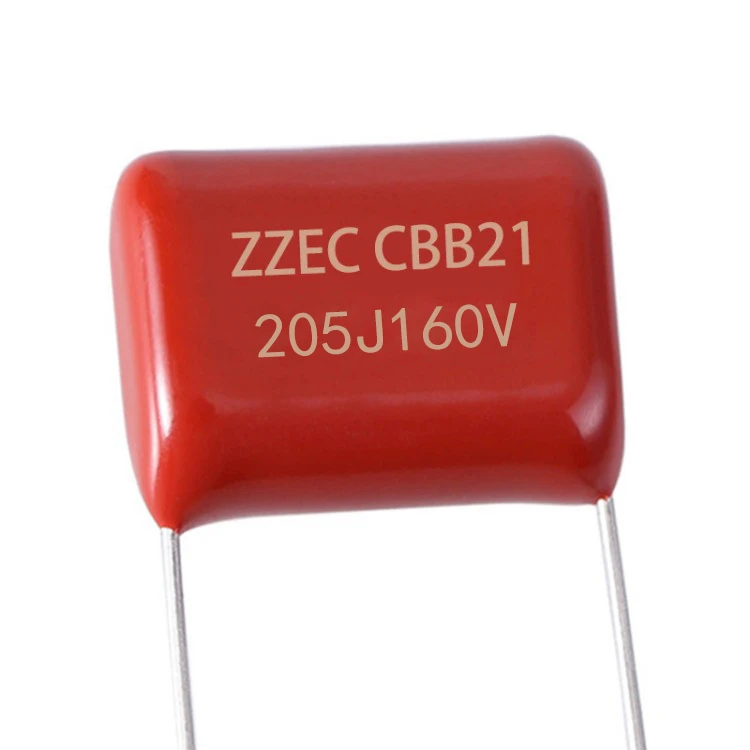
One of our popular products, the CBB21 - Film Capacitor 160V, is well - suited for coupling applications in mid - voltage audio and RF circuits. Its stable electrical properties ensure reliable signal transfer.
Mkp Capacitors in Decoupling Applications
Mkp capacitors also have a place in decoupling applications, although they are not as commonly used as ceramic or electrolytic capacitors in some cases.
In high - frequency power distribution networks, the low ESL of Mkp capacitors allows them to provide a low - impedance path for high - frequency noise. They can quickly absorb and release energy, reducing the voltage spikes and ripple in the power supply. However, their relatively low capacitance values compared to electrolytic capacitors can be a limitation in some applications where large amounts of energy storage are required.
For circuits with moderate current demands and high - frequency noise issues, Mkp capacitors can be a good choice. For example, in some high - speed digital circuits, the 335j 400v Capacitor can be used as a decoupling capacitor. Its high voltage rating and low ESL make it suitable for handling the transient currents and high - frequency noise in such circuits.
In some cases, a combination of Mkp capacitors with other types of capacitors can be used to achieve better decoupling performance. For example, an electrolytic capacitor can be used for low - frequency energy storage, while an Mkp capacitor can be used for high - frequency noise suppression.
Comparison with Other Capacitor Types
To fully understand the suitability of Mkp capacitors in coupling and decoupling applications, it's useful to compare them with other common capacitor types.
Ceramic Capacitors: Ceramic capacitors are widely used in decoupling applications due to their small size, high capacitance values, and low cost. However, they may have higher ESR and ESL at high frequencies compared to Mkp capacitors. In coupling applications, ceramic capacitors may introduce more distortion in high - quality audio circuits, while Mkp capacitors offer better linearity.

Electrolytic Capacitors: Electrolytic capacitors are known for their high capacitance values, making them suitable for large - scale energy storage in power supplies. But they have relatively high ESR and a limited frequency response. In coupling applications, electrolytic capacitors are not preferred because of their poor high - frequency performance and the potential for DC bias leakage.
Considerations for Using Mkp Capacitors
When using Mkp capacitors in coupling and decoupling applications, several factors need to be considered:
- Capacitance Value: The capacitance value should be selected based on the frequency range of the signal in coupling applications or the current demand and frequency of the noise in decoupling applications.
- Voltage Rating: Ensure that the voltage rating of the Mkp capacitor is higher than the maximum voltage it will encounter in the circuit to prevent breakdown.
- Temperature Coefficient: The temperature coefficient of the capacitor can affect its performance over a wide temperature range. For applications where temperature stability is critical, capacitors with a low temperature coefficient should be chosen.
Our CBB21 - Film Capacitor 100V is designed with these considerations in mind, offering stable performance across a range of operating conditions.
Conclusion
In conclusion, Mkp capacitors can indeed be used in both coupling and decoupling applications. Their low losses, high insulation resistance, self - healing property, and high - frequency performance make them a viable option for many circuits. While they may not be the first choice in all situations, especially when compared to ceramic or electrolytic capacitors in terms of cost and capacitance density, they offer unique advantages in high - quality and high - frequency applications.
If you are interested in exploring the use of Mkp capacitors for your coupling or decoupling needs, I encourage you to reach out for further discussion. We have a wide range of Mkp capacitor products that can be tailored to your specific requirements. Whether you are designing a high - end audio amplifier or a high - speed digital circuit, our team of experts can help you select the most suitable capacitors for your project. Contact us today to start the procurement and negotiation process.
References
- Dorf, R. C., & Svoboda, J. A. (2018). Introduction to Electric Circuits. Wiley.
- Schilling, D. L., & Belove, C. (1979). Electronic Circuits: Discrete and Integrated. McGraw - Hill.