




Can Cbb21 105j400v be used in power factor correction (PFC) circuits?
 Oct 21, 2025|
 Can Cbb21 105j400v be used in power factor correction (PFC) circuits?

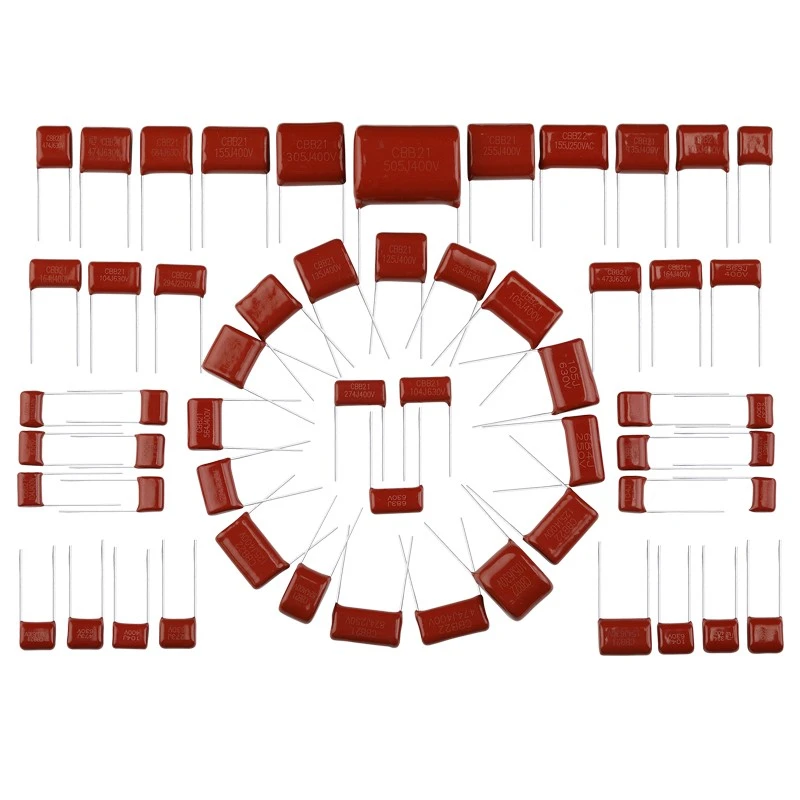
As a supplier of Cbb21 105j400v capacitors, I often get asked whether these capacitors can be effectively used in power factor correction (PFC) circuits. In this blog post, I'll delve into the technical aspects to provide a comprehensive answer.
Understanding Power Factor Correction
Power factor correction is a crucial process in electrical systems. In an AC circuit, the power factor (PF) is the ratio of real power (P) to apparent power (S). A low power factor indicates that a significant portion of the electrical energy is being used inefficiently, often due to the presence of reactive power. Reactive power is caused by inductive or capacitive loads in the circuit.
The goal of PFC is to improve the power factor, typically by adding capacitors to the circuit. Capacitors can supply reactive power to offset the reactive power demanded by inductive loads, thus reducing the overall reactive power in the system and increasing the power factor. A higher power factor leads to more efficient use of electrical energy, lower energy costs, and reduced stress on electrical equipment.
Characteristics of Cbb21 105j400v Capacitors
The Cbb21 series of capacitors are metalized polypropylene film capacitors. The "105j" in the Cbb21 105j400v specification represents the capacitance value. Using the standard capacitor labeling system, "105" means (10\times10^{5}) picofarads, which is equivalent to 1 microfarad ((1\mu F)). The "j" indicates the tolerance of the capacitance, which is ±5%. The "400v" represents the rated voltage of the capacitor, meaning it can safely operate at voltages up to 400 volts.
These capacitors have several advantages that make them suitable for various applications. They have low equivalent series resistance (ESR), which means they can handle high - frequency currents with minimal power loss. They also have good self - healing properties. In case of a dielectric breakdown, the metalized film can self - heal, restoring the capacitor's functionality and preventing catastrophic failure.
Suitability for PFC Circuits
Voltage Rating
One of the key considerations when using a capacitor in a PFC circuit is the voltage rating. The Cbb21 105j400v capacitor has a rated voltage of 400 volts. In many industrial and commercial electrical systems, the line voltage is around 220V or 380V. The 400V rating of the Cbb21 105j400v capacitor provides a sufficient safety margin, ensuring that the capacitor can withstand the normal operating voltages and any voltage spikes that may occur in the circuit.
Capacitance Value
The capacitance value of (1\mu F) in the Cbb21 105j400v capacitor can be useful in PFC circuits, depending on the specific requirements of the load. For small - to medium - sized inductive loads, a (1\mu F) capacitor can provide an appropriate amount of reactive power to correct the power factor. However, for larger inductive loads, multiple capacitors may need to be connected in parallel to increase the total capacitance and supply more reactive power.
Frequency Response
Cbb21 capacitors have a good frequency response due to their low ESR. In PFC circuits, the frequency of the electrical supply is typically 50Hz or 60Hz. The Cbb21 105j400v capacitor can effectively operate at these frequencies, providing stable reactive power compensation.
Limitations and Considerations
While the Cbb21 105j400v capacitor has many features that make it suitable for PFC circuits, there are also some limitations and considerations.
Temperature Effects
The performance of capacitors can be affected by temperature. Cbb21 capacitors have a certain temperature coefficient, which means that the capacitance value may change slightly with temperature. In PFC circuits, it is important to ensure that the operating temperature of the capacitor is within its specified range to maintain accurate power factor correction.
Harmonic Distortion
In some electrical systems, there may be harmonic distortion in the voltage or current waveforms. Harmonics are frequencies that are integer multiples of the fundamental frequency (50Hz or 60Hz). Cbb21 capacitors can be affected by harmonic currents, which may cause overheating and premature failure. In such cases, additional filtering or protection measures may be required.
Other Related Cbb21 Capacitors
If the Cbb21 105j400v capacitor does not meet the specific requirements of a PFC circuit, there are other options within the Cbb21 series. For example, the 335j 400v Capacitor has a different capacitance value. Using the same labeling system, "335" means (33\times10^{5}) picofarads, which is equivalent to 3.3 microfarads. This higher capacitance value may be more suitable for larger inductive loads.
The CBB21 - Film Capacitor 160V has a lower voltage rating. It can be used in circuits where the operating voltage is lower, such as some low - voltage DC or AC circuits. You can find more information about the general Cbb21 series on our Cbb21 page.
Conclusion
In summary, the Cbb21 105j400v capacitor can be used in power factor correction circuits. Its voltage rating, capacitance value, and frequency response make it a viable option for small - to medium - sized inductive loads. However, it is important to consider the specific requirements of the circuit, such as temperature conditions and harmonic distortion.
If you are interested in using Cbb21 105j400v capacitors or other Cbb21 series capacitors for your PFC applications, we are here to assist you. Our team of experts can provide technical support and help you select the most suitable capacitors for your needs. Feel free to contact us to discuss your requirements and start a procurement negotiation.
References
- "Power Factor Correction Handbook" by Schneider Electric
- "Capacitor Technology and Applications" by Cornell Dubilier Electronics