



Are there any alternatives to Capacitor Axial?
 Aug 20, 2025|
 As a supplier of Capacitor Axial, I often encounter inquiries from customers about whether there are alternatives to this type of capacitor. In this blog post, I will explore some of the potential alternatives to Capacitor Axial, discussing their features, advantages, and disadvantages, to help you make an informed decision when choosing the right capacitor for your specific application.
Understanding Capacitor Axial
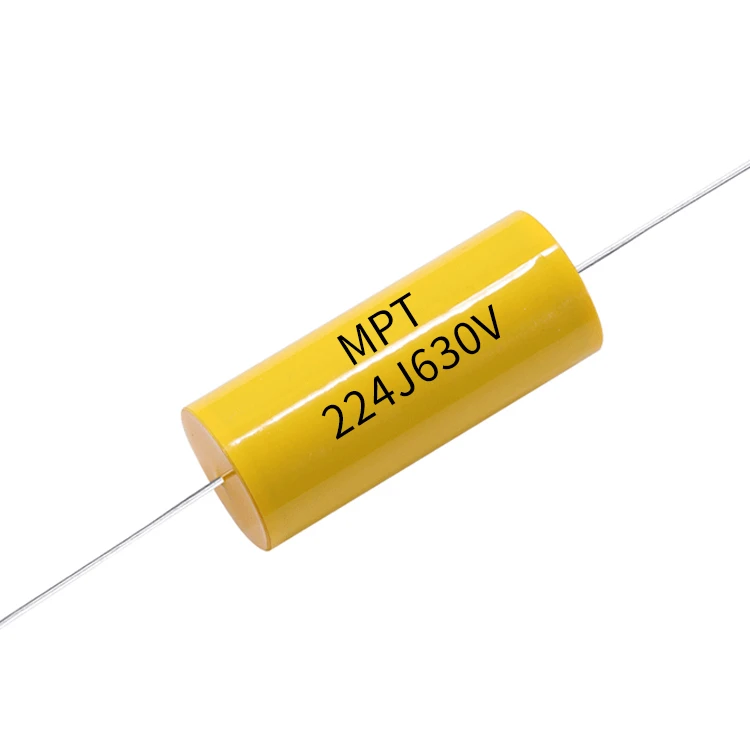
Before delving into the alternatives, it's important to understand what Capacitor Axial is. Axial capacitors are a type of fixed capacitor where the leads are drawn out from the two ends of the capacitor body in a straight line. They are widely used in various electronic circuits due to their simple structure, stable performance, and relatively low cost. Capacitor Axial comes in different dielectric materials, such as ceramic, electrolytic, and film, each with its own characteristics and application scenarios.
Alternatives to Capacitor Axial
1. Radial Capacitors
Radial capacitors are another common type of fixed capacitor. Unlike axial capacitors, the leads of radial capacitors are drawn out from the bottom of the capacitor body. This design allows for a more compact layout on the printed circuit board (PCB), making them suitable for applications where space is limited.
Advantages
- Space - saving: The radial lead design enables a more efficient use of PCB space, especially in high - density circuit designs.
- Easy mounting: Radial capacitors can be easily mounted on the PCB using automated pick - and - place machines, which is beneficial for mass production.
Disadvantages
- Limited voltage and capacitance range: Compared to some axial capacitors, radial capacitors may have a more limited range of available voltage ratings and capacitance values.
- Higher inductance: In high - frequency applications, radial capacitors may have relatively higher inductance, which can affect the performance of the circuit.
2. Surface - Mount Capacitors (SMD)
Surface - mount capacitors have become increasingly popular in modern electronics due to the trend towards miniaturization and high - density packaging. SMD capacitors are directly mounted on the surface of the PCB without the need for holes, which significantly reduces the size of the circuit board.
Advantages
- Miniaturization: SMD capacitors are much smaller in size compared to axial and radial capacitors, making them ideal for portable electronic devices such as smartphones, tablets, and wearables.
- High - frequency performance: They generally have lower inductance and better high - frequency characteristics, which is crucial for high - speed digital circuits and RF applications.
Disadvantages
- Difficult to replace: Once soldered onto the PCB, SMD capacitors can be challenging to replace, especially for hobbyists or in situations where quick repairs are needed.
- Sensitivity to mechanical stress: SMD capacitors are more sensitive to mechanical stress, such as vibration and shock, which may lead to cracking or other failures.
3. Different Dielectric Film Capacitors
There are also various types of film capacitors with different dielectric materials that can serve as alternatives to axial film capacitors. For example, polycarbonate film capacitors offer high insulation resistance and good temperature stability, while polyester film capacitors are known for their relatively low cost and wide capacitance range.
Advantages
- Tailored performance: Different dielectric materials can provide specific electrical properties, allowing for more precise customization according to the requirements of the application.
- Long - term stability: Film capacitors generally have good long - term stability, with low capacitance drift over time and temperature changes.
Disadvantages
- Higher cost: Some high - performance film capacitors may be more expensive than standard axial capacitors, which can be a limiting factor for cost - sensitive applications.
- Size limitations: Depending on the dielectric material and capacitance value, film capacitors may have larger physical sizes compared to some other capacitor types.
Specific Product Alternatives
In our product range, we offer several axial lead film capacitors that can be considered as alternatives in different scenarios. For example, the CBB20 - Axial Lead Film Capacitor 400V and CBB20 - Axial Lead Film Capacitor 630V are made of metalized polypropylene film, which provides excellent self - healing properties, low loss, and high insulation resistance. These capacitors are suitable for a wide range of applications, including power supplies, motor control, and lighting circuits.
Another product, the 105J400V Axial Capacitors for IGBT Protection, is specifically designed for protecting insulated - gate bipolar transistors (IGBTs). It can effectively absorb the energy generated during the switching process of IGBTs, preventing overvoltage and overcurrent damage.

Factors to Consider When Choosing an Alternative
When deciding whether to use an alternative to Capacitor Axial, several factors should be taken into account:
1. Electrical Requirements
- Capacitance value: Ensure that the alternative capacitor has the appropriate capacitance value to meet the requirements of the circuit.
- Voltage rating: The voltage rating of the capacitor must be higher than the maximum voltage that will be applied in the circuit to prevent breakdown.
- Frequency response: For high - frequency applications, choose a capacitor with low inductance and good high - frequency characteristics.
2. Physical Constraints
- Size and shape: Consider the available space on the PCB and the mounting requirements. If space is limited, SMD or radial capacitors may be more suitable.
- Mechanical stability: In applications where the device may be subject to vibration or shock, choose a capacitor with good mechanical stability.
3. Cost
- Budget: Evaluate the cost of the alternative capacitor, especially in mass - production scenarios. Sometimes, a slightly more expensive capacitor may offer better performance and reliability, which can offset the additional cost in the long run.
Conclusion
In conclusion, while Capacitor Axial has its own advantages and is widely used in many electronic applications, there are several alternatives available that can better meet specific requirements. Radial capacitors, surface - mount capacitors, and different types of film capacitors all offer unique features and benefits. By carefully considering the electrical requirements, physical constraints, and cost factors, you can select the most appropriate capacitor for your project.
If you are interested in our axial lead film capacitors or need further advice on capacitor selection, please feel free to contact us for procurement and negotiation. We are committed to providing high - quality products and professional technical support to meet your needs.
References
- "Capacitor Handbook" by John A. Camara
- "Electronic Components and Circuit Theory" by Robert L. Boylestad and Louis Nashelsky