




Miniature Humidifier Film Capacitor Selection Guide: Technical Characteristics, Standards, And Practical Examples
 Nov 07, 2025|
 I. Core Technical Characteristics: Comparison of Three Types of Film Capacitors
The high-frequency oscillation circuit in compact humidifiers imposes stringent demands on capacitors regarding high-frequency loss, temperature stability, and physical size. Below is a comparison of key characteristics for three mainstream film capacitor types:
| Medium Type | Polyester (PET/MKT) | Polypropylene (PP/MKP) | Polyphenylene sulfide (PPS) |
| High-Frequency Characteristics | Significant loss (tanδ increases markedly with frequency) | Extremely low loss (tanδ ≤ 0.1%), optimal high-frequency performance | Moderate loss (between PET and PP) |
| Temperature Stability | Large capacitance variation (unstable temperature coefficient) | Low and stable temperature coefficient, stable performance from -55°C to +125°C | Wide temperature range (-55°C to +150°C), excellent linearity |
| Volume and Capacity | High dielectric constant (3.3), smallest volume for equivalent capacitance | Low dielectric constant (2.2), relatively large volume | Dielectric constant 3.0, more compact than PP |
| Self-Healing Capability | General | Excellent recovery capability (can recover after partial breakdown) | Good |
| Typical Application Scenarios | Low cost, low-frequency filtering (e.g., power supply sections in traditional humidifiers) | High-frequency oscillation circuits, resonant filtering (core circuit for miniaturized humidifiers) |
High-temperature, high-precision environments (industrial humidifiers) |

II. Five Core Criteria for Component Selection
1. Dielectric Material: Prioritize Polypropylene (PP) or Modified Polyester
PP is mandatory for high-frequency applications: High-frequency oscillation circuits in compact humidifiers (e.g., 2.7GHz ultrasonic modules) require minimal loss. PP capacitors exhibit superior high-frequency current handling capability, reducing temperature rise by over 30% (compared to PET).
PET for Space Constraints: When cost and size take precedence over high-frequency performance (e.g., entry-level models), metallized polyester capacitors may be used, but operating frequency must be limited to ≤100kHz.
2. Electrical Parameters: Voltage, Ripple, and Derating Design
Rated Voltage: Must exceed 1.2 times the circuit's peak voltage. For example, a 100V circuit requires a 125V capacitor (refer to ZZEC's "20% voltage derating" standard).
Ripple Current: In high-frequency circuits, focus on "allowable ripple current at 100kHz frequency." Select PP capacitors with ripple current ≥1A (e.g., ZZEC series).
3. Environmental Adaptability: Moisture Resistance and Temperature Range
Operating Temperature: Household humidifiers feature high ambient humidity. Select products with a wide temperature range of -40°C to +105°C to prevent insulation resistance (IR) degradation due to moisture (IR ≥ 10MΩ is the qualifying standard).
Encapsulation Process: Prioritize epoxy encapsulation or plastic case packaging, which offers superior moisture resistance compared to traditional resin encapsulation (e.g., ZZEC's "alloy gold spraying + thickened aluminum-plated film" process enhances moisture resistance by 50%).
4. Dimensions and Mounting: Surface-mount preferred
Miniaturization: Opt for SMD packaging. SMD film capacitors in 0805/1206 sizes save PCB space. For example, the surface-mount version of the 104J (0.1μF) PP capacitor occupies only one-third the volume of the through-hole type.
Pin Pitch Compatibility: Ensure pin pitch aligns with PCB design to prevent solder joint cracking due to mounting stress.
5. Reliability and Certification
Self-healing testing: Passes 100kHz high-frequency withstand voltage testing (e.g., ZZEC products validated through 10 years of 50 million units without failure).
Safety certification: For power filtering circuits, compliance with X2/Y2 safety standards is required (e.g., UL 60384-14 certification).
III. Application Case: ZZEC High-Frequency Humidifier Capacitor Solution
Addressing capacitor failure issues in a client's humidifier high-frequency circuit (originally using 104J100V PET capacitors with a 0.02% failure rate), Koya Electronics achieved reliability breakthroughs through the following optimizations:
Material Upgrade: Replaced traditional PET film with imported ultra-thin polypropylene film (3μm thickness) + thickened aluminum coating (enhancing self-healing capability).
Process Improvement: Introduced vacuum gold spraying (alloy electrodes) to reduce contact resistance, lowering high-frequency loss (tanδ) from 0.5% to 0.08%.
Test Validation: Passed 1000-hour aging tests at 2.7GHz frequency with capacitance decay ≤1%, meeting humidifier requirements for long-term high-frequency operation.
Achievements: This solution has been deployed in 50 million units with zero customer complaints, establishing itself as the benchmark component solution for miniaturized high-frequency humidifiers.
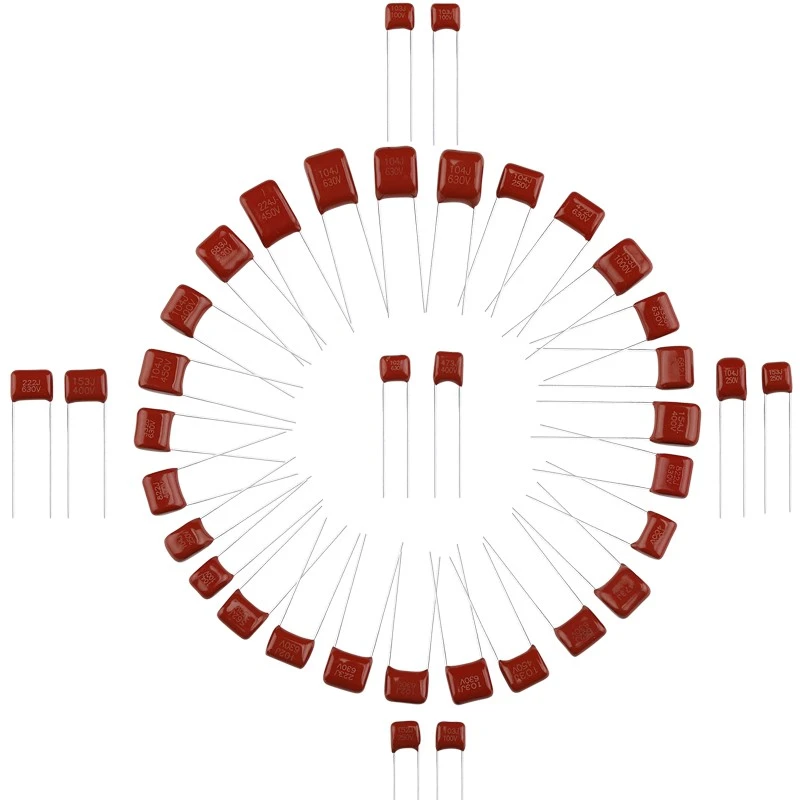
Conclusion: Balancing Performance and Cost in Component Selection
When selecting film capacitors for miniaturized humidifiers, prioritize "high-frequency low-loss characteristics, moisture resistance stability, and compact dimensions." Opt for polypropylene dielectric materials and surface-mount packaging. Enhance reliability through derating (voltage, temperature) and process optimization. As demonstrated by the Koya case study, judicious material and process choices significantly reduce failure risks, ensuring long-term protection for end devices.
Note: When selecting components, request manufacturers' "high-frequency characteristic curves" and "ripple current ratings." Avoid focusing solely on capacitance and voltage parameters while neglecting actual operating conditions.